PCL and Multiligament Reconstruction
Advanced surgical reconstruction for complex multiligament injuries involving the PCL and other stabilizing structures of the knee.
Overview
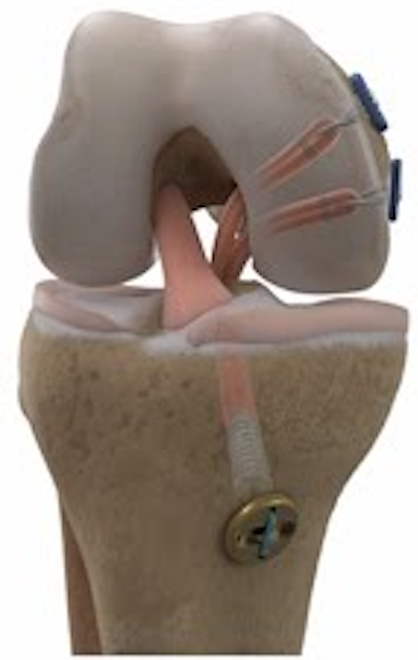
PCL and multiligament knee reconstruction addresses complex injuries affecting multiple ligaments (PCL, MCL, ACL, posterolateral corner). This advanced surgical technique restores knee stability through anatomical graft placement and tissue repair. Multiligament injuries require comprehensive assessment and staged or combined surgical approaches to optimize functional outcomes.
Indications
- Symptomatic posterolateral instability with PCL deficiency
- Combined PCL and other ligament injuries (ACL, MCL, posterolateral corner)
- Failed previous ligament reconstruction
- Chronic multiligament laxity causing functional limitations
- High-energy trauma resulting in multiligament injury
Recovery
6-12 months initial recovery; return to sport 9-18 months depending on injury complexity
The STaR Randomized Clinical Trial
Mr Getgood is a co-investigator for the STaR Randomized Clinical Trial that investigates the optimal timing and rehabilitation for multiple ligament knee injury. Led by the University of Pittsburgh, and including over 30 sites across North America, Mr Getgood recruited the largest number of patients into the study during his time at the Fowler Kennedy Sport Medicine Clinic in London, Ontario Canada. The results of the STaR Trial will be released from 2027 onwards.
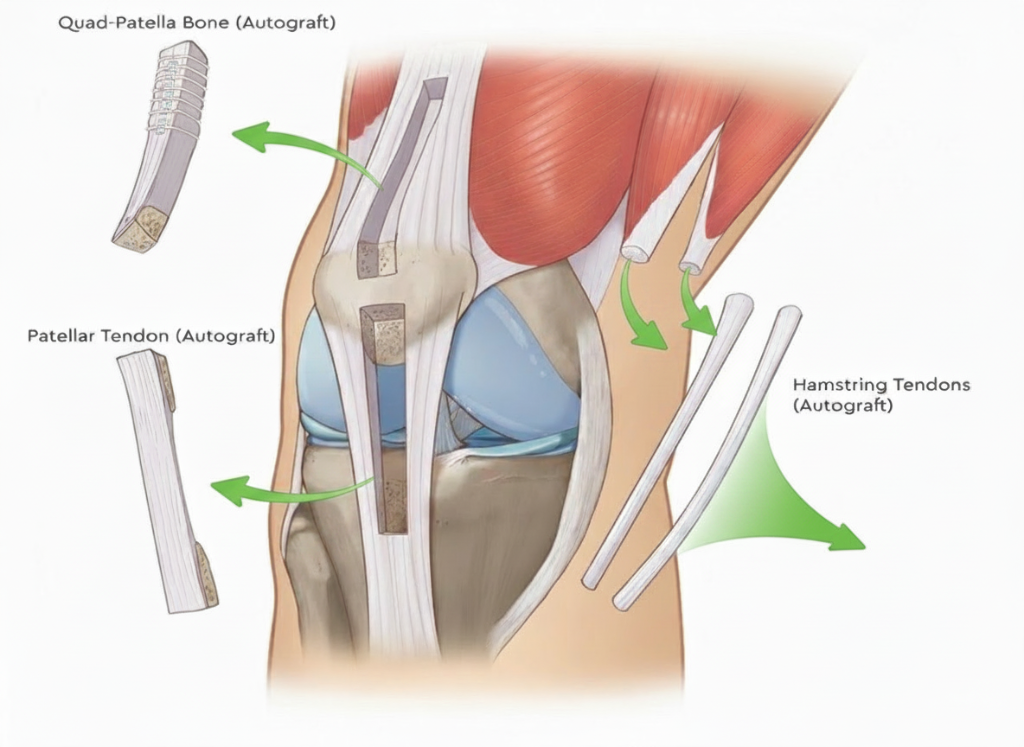
Graft Options
Mr Getgood offers multiple graft sources tailored to your anatomy, activity level, and surgical circumstances. In multiligament cases, graft choice is carefully coordinated to reconstruct all injured structures. The choice of graft is individualised and discussed during your consultation.
Rehabilitation Programme
Rehabilitation following PCL and multiligament reconstruction is highly individualised and progresses through five structured phases. Hamstring protection is paramount in the early phases. All progressions are criteria-based and directed by your physiotherapist in conjunction with Mr Getgood's clinical review.
| Phase / Time | Brace & Weight Bearing | ROM | Exercises |
|---|---|---|---|
Phase I Weeks 0–2 Protection & Early Passive ROM | Tracker brace 0–90°, locked in extension when ambulating. Worn 24 hours/day. Flat foot feather touch weight bearing with crutches. | Prone or supine assisted knee flexion 0–90° with proximal tibia protected. No hyperextension. Patella mobilisation. | ⚠ NO ACTIVE HAMSTRINGS / KNEE FLEXION
|
Phase II Weeks 2–6 ROM & Muscle Activation | Transfer to Ossur PCL Rebound brace once soft tissue swelling allows. Flat foot partial weight bearing with crutches. | Prone or supine assisted knee flexion 0–90° with proximal tibia protected. Patella mobilisation. | ⚠ NO ACTIVE HAMSTRINGS / KNEE FLEXION
|
Phase III Weeks 6–12 ROM & Strengthening | Continue Ossur PCL Rebound brace. Weight bear as tolerated until normal heel-toe gait. | Full range of motion. Patella mobilisation. | ⚠ CAN START ACTIVE HAMSTRINGS in Ossur PCL Rebound brace only (if not in brace, keep hamstrings quiet until 12 weeks post-op)
|
Phase IV Months 3–6 Advanced Strengthening & Return to Light Work | Continue Ossur PCL Rebound brace. Weight bear as tolerated. | Full range of motion. |
|
Phase V 6+ Months Advanced Strengthening & Return to Activities | Brace use as tolerated. Full weight bearing. | Full range of motion. |
|
Phase I — Weeks 0–2
Protection & Early Passive ROM
Brace & Weight Bearing
Tracker brace 0–90°, locked in extension when ambulating. Worn 24 hours/day. Flat foot feather touch weight bearing with crutches.
ROM
Prone or supine assisted knee flexion 0–90° with proximal tibia protected. No hyperextension. Patella mobilisation.
Exercises
⚠ NO ACTIVE HAMSTRINGS / KNEE FLEXION
- Isometric quad contractions
- Gluteal activation (supine or standing)
- Isometric hip adduction/abduction
- Ankle pumping
- Ice, compression and analgesics as needed
- Compex/muscle stimulation to assist quadriceps activation
- Blood flow restriction (BFR) therapy during lower limb exercises
Phase II — Weeks 2–6
ROM & Muscle Activation
Brace & Weight Bearing
Transfer to Ossur PCL Rebound brace once soft tissue swelling allows. Flat foot partial weight bearing with crutches.
ROM
Prone or supine assisted knee flexion 0–90° with proximal tibia protected. Patella mobilisation.
Exercises
⚠ NO ACTIVE HAMSTRINGS / KNEE FLEXION
- Isometric quad contractions (± muscle stimulation)
- Gluteal activation, isometric hip adduction/abduction, ankle pumping
- Mini squats 0–30° with brace on (weight bear as tolerated during this exercise)
- Non-WB hip stability: abduction, extension, external rotation, clam shells, supine bridging on Swiss ball
- Ankle theraband plantar flexion, sitting calf raises
- Ice compression therapy to manage swelling and pain
- Blood flow restriction (BFR) therapy during strengthening exercises
Phase III — Weeks 6–12
ROM & Strengthening
Brace & Weight Bearing
Continue Ossur PCL Rebound brace. Weight bear as tolerated until normal heel-toe gait.
ROM
Full range of motion. Patella mobilisation.
Exercises
⚠ CAN START ACTIVE HAMSTRINGS in Ossur PCL Rebound brace only (if not in brace, keep hamstrings quiet until 12 weeks post-op)
- Gait retraining
- Quadriceps isometrics in long sitting and standing (± muscle stimulation)
- Weight shifting: 2 scales 50–50 WB
- Leg extension / quad over roll, active terminal knee extension with theraband
- Abdominal and core strengthening (curl-ups, transversus abdominis with SLR)
- Standing hip flexion/extension, abduction/adduction with weights/bands
- Shuttle / leg press: 2-leg squat / calf raises, progress to 1-leg; increase ROM & resistance
- Mini wall squats 30–60° → 60–90°; sit to stand
- Calf raises 2→1 foot; up-on-toes walking
- Ice compression therapy to manage swelling and pain
- Compex/muscle stimulation to assist muscle activation
- Blood flow restriction (BFR) therapy during strengthening exercises
Phase IV — Months 3–6
Advanced Strengthening & Return to Light Work
Brace & Weight Bearing
Continue Ossur PCL Rebound brace. Weight bear as tolerated.
ROM
Full range of motion.
Exercises
- Bike pendulums: ½ circles → full circles (lower seat as tolerated)
- Supine bridging: 2→1 leg Swiss ball bridge + knee flexion
- Hamstring curls: prone and sitting, progress 1–2 lb weights
- Continue core strengthening functionally (obliques, planks, Pilates)
- Sit to stand → single leg (watch mechanics)
- Progress resistance on shuttle; working on strength and endurance, 2→1 leg
- Static lunge → dynamic lunge → lunge walking
- Low resistance stationary bike
- Wobble boards with support: side-to-side and forward/backward
- Single leg stance 30–60 seconds (when full WB)
- May begin jogging/running once full ROM with quiet knee and neuromuscular control
- Blood flow restriction (BFR) therapy during strengthening exercises
Phase V — 6+ Months
Advanced Strengthening & Return to Activities
Brace & Weight Bearing
Brace use as tolerated. Full weight bearing.
ROM
Full range of motion.
Exercises
- Bungee cord walking: forward, backward, side step, lunging; add speed/direction change
- Forward and lateral step-ups 2–4–6" and eccentric lateral step-down with control
- Squats and lunges on Dynadisc / Airex / BOSU
- Hamstring curls: standing and sitting with weights/pulleys/bungee
- Single leg stance on unstable surfaces (pillow, mini-tramp, BOSU, Dynadisc)
- Standing 747s eyes open/closed → progress to mini trampoline
- Agility: cariocas, figure 8s around cones, ladder drills, lateral shuffle
- Line jumping, backward/forward/side-to-side → diagonals/combined patterns, 2→1 leg
- Jumping: tuck jumps, box jumps, long jumps
- Hopping: single-leg distance, 6 m timed, triple hop, cross-over
- Sport-specific multi-directional drills and contact when adequate core/LE patterning
* Timelines are approximate. Exercises are given as examples only and should be directed by your physiotherapist. Progression is criteria-based and directed by your physiotherapist in conjunction with Mr Getgood's clinical review. Individual recovery varies.
Frequently Asked Questions
Supporting Evidence
Noteworthy Publications from Mr Getgood Pertaining to PCL & Multiligament Knee Reconstruction
Mr Getgood has contributed extensively to the evidence base for multiligament knee injuries, including medial and posterolateral corner reconstruction techniques and the optimal timing of surgery and rehabilitation.
Irrgang JJ, Lynch AD, Patterson CG, Gil AB, Burns TC, Dalzell M, et al. Surgical Timing and Rehabilitation (STaR) for Multiple Ligament Knee Injuries: Study Protocol for a Multicenter Integrated Clinical Trial. JB JS Open Access. 2026;11(2).
van der List JP, Fiegen AP, Alaia MJ, Getgood A, Levy BA, Musahl V, et al. Controversies in Timing of Surgery and Rehabilitation for Multiligamentous Knee Injuries. Instr Course Lect. 2025;74:129–40.
Beel W, Vivacqua T, Willing R, Getgood A. Double-Bundle Medial Collateral Ligament Reconstruction Improves Anteromedial Rotatory Instability. Am J Sports Med. 2024;52(8):1970–8.
Tapasvi S, Shekhar A, Patil S, Getgood A. Anatomic medial knee reconstruction restores stability and function at minimum 2 years follow-up. Knee Surg Sports Traumatol Arthrosc. 2022;30(1):280–7.
Dhollander A, Sellan M, Firth AD, Getgood A. Valgus stress radiography following superficial medial collateral ligament reconstruction using a modified LaPrade technique with adjustable loop femoral fixation. Acta Orthop Belg. 2020;86(2):280–6.
Wood R, Robinson J, Getgood A. Anatomic Posterolateral Corner Reconstruction Using Single Graft Plus Adjustable-Loop Suspensory Fixation Device. Arthrosc Tech. 2019;8(3):e301–e9.
Other Noteworthy Publications Pertaining to Multiligament Knee Reconstruction
Borque KA, Jones M, Balendra G, Willinger L, Pinheiro VH, Anand BS, et al. High return to play rate following treatment of multiple-ligament knee injuries in 136 elite athletes. Knee Surg Sports Traumatol Arthrosc. 2022;30(10):3393–401.
LaPrade RF, Cinque ME, Dornan GJ, DePhillipo NN, Geeslin AG, Moatshe G, et al. Double-Bundle Posterior Cruciate Ligament Reconstruction in 100 Patients at a Mean 3 Years’ Follow-up: Outcomes Were Comparable to Anterior Cruciate Ligament Reconstructions. Am J Sports Med. 2018;46(8):1809–18.
Levy BA, Dajani KA, Morgan JA, Shah JP, Dahm DL, Stuart MJ. Repair versus reconstruction of the fibular collateral ligament and posterolateral corner in the multiligament-injured knee. Am J Sports Med. 2010;38(4):804–9.
Levy BA, Dajani KA, Whelan DB, Stannard JP, Fanelli GC, Stuart MJ, et al. Decision making in the multiligament-injured knee: an evidence-based systematic review. Arthroscopy. 2009;25(4):430–8.
Moatshe G, Chahla J, Brady AW, Dornan GJ, Muckenhirn KJ, Kruckeberg BM, et al. The Influence of Graft Tensioning Sequence on Tibiofemoral Orientation During Bicruciate and Posterolateral Corner Knee Ligament Reconstruction: A Biomechanical Study. Am J Sports Med. 2018;46(8):1863–9.