Ski Season Knee Injuries
The knee is the most commonly injured joint in skiing. Snow, steep terrain and a long lever attached to the foot all load the knee in ways it is not built to resist — and most injuries happen late in the day, on the last run, when fatigue has set in.
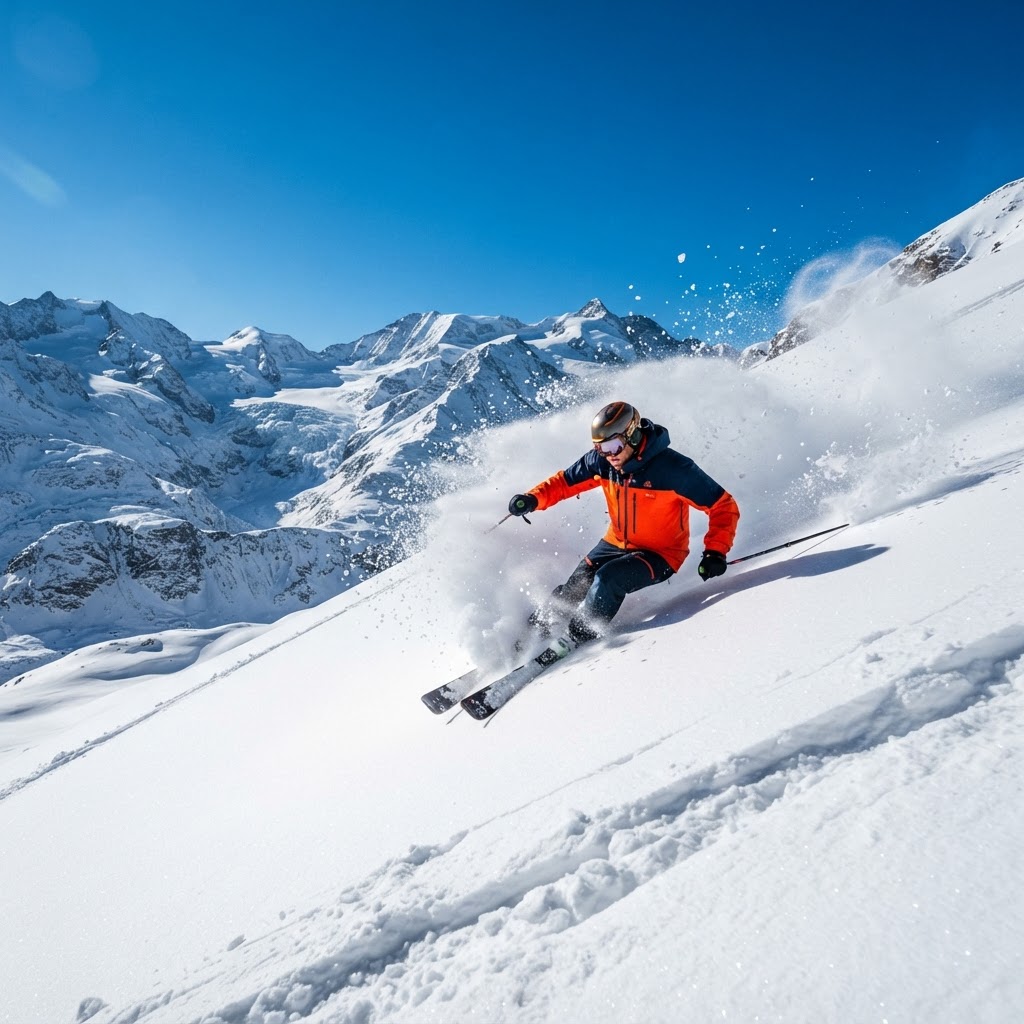
Why the knee takes the load
A ski is a long lever. When a binding does not release as intended, the twisting forces generated at the ski are transmitted directly to the knee. Combined with a stiff boot holding the lower leg fixed, relatively modest falls can produce significant ligament and meniscal injury.
Fatigue, poor visibility, icy conditions at the end of the day and skiing beyond your ability level all increase the risk. Many injuries occur on the final descent rather than in difficult terrain.
Injuries we see most often
ACL rupture
Usually a non-contact injury — the knee twists or collapses inward as the ski runs away from the body. Patients often describe a pop, with swelling developing within a few hours and a feeling of instability afterwards.
MCL sprain
A force pushing the knee inward strains the ligament on the inner side of the knee. Pain is felt on the medial side and most isolated injuries settle well with a structured non-operative programme.
Meniscal tear
A loaded, twisting knee can tear the meniscus. Symptoms include swelling over the following day, joint-line pain and catching or locking. Repair is preferred to removal whenever the tear allows.
Patellar dislocation
A twisting fall can dislocate the kneecap laterally. It is more common in younger and female skiers and often requires assessment of the supporting structures on the inner side of the knee.
Fractures
Higher-energy falls can fracture the tibial plateau or proximal tibia. Inability to weight bear, marked swelling and deformity all warrant urgent assessment and imaging.
Before you go: reducing the risk
- Build strength before the season. Four to six weeks of quadriceps, hamstring and glute strengthening, plus balance work, makes a meaningful difference.
- Have your bindings checked. Correct release settings for your height, weight and ability, verified by a technician, are one of the most effective protections against knee injury.
- Ski within your ability and warm up. The first and last runs of the day carry the highest risk.
- Stop when you are tired. Most serious injuries happen when concentration and muscle control fade.
Seek urgent assessment if any of these apply
- You cannot weight bear on the leg at all
- Swelling develops within a few hours of the fall
- The knee gives way, locks or will not straighten
- There is obvious deformity or severe pain at rest
In the first 48 hours, relative rest, ice, compression and elevation help control swelling. Avoid returning to the slopes until the knee has been assessed.
Treatment and returning to the slopes
Many ski injuries — particularly isolated MCL sprains and some meniscal tears — are managed without surgery, using a structured rehabilitation programme and a graded return to sport.
For an ACL rupture in a skier who wants to return to the sport at the same level, reconstruction is usually recommended, followed by nine to twelve months of rehabilitation and objective return-to-sport testing before stepping back onto snow.
Where the meniscus is torn, repair is preferred to removal whenever the tear pattern allows, in order to protect the joint over the longer term.
Injured your knee skiing?
Rapid assessment allows the right diagnosis and the right plan — whether that is rehabilitation or surgery.
Request a consultationThis page provides general information only and is not a substitute for individual medical advice.